Who should get checked for weakening bones, and why more Angelenos are skipping the hospital trip in favor of an in home, radiation free scan.
A fall on a Palos Verdes hiking trail, or a slip on the back steps of a Santa Monica bungalow, can turn into a broken hip in a single second. What many Angelenos do not realize is that the bone was often weakening quietly for years before that moment, with no pain and no warning.
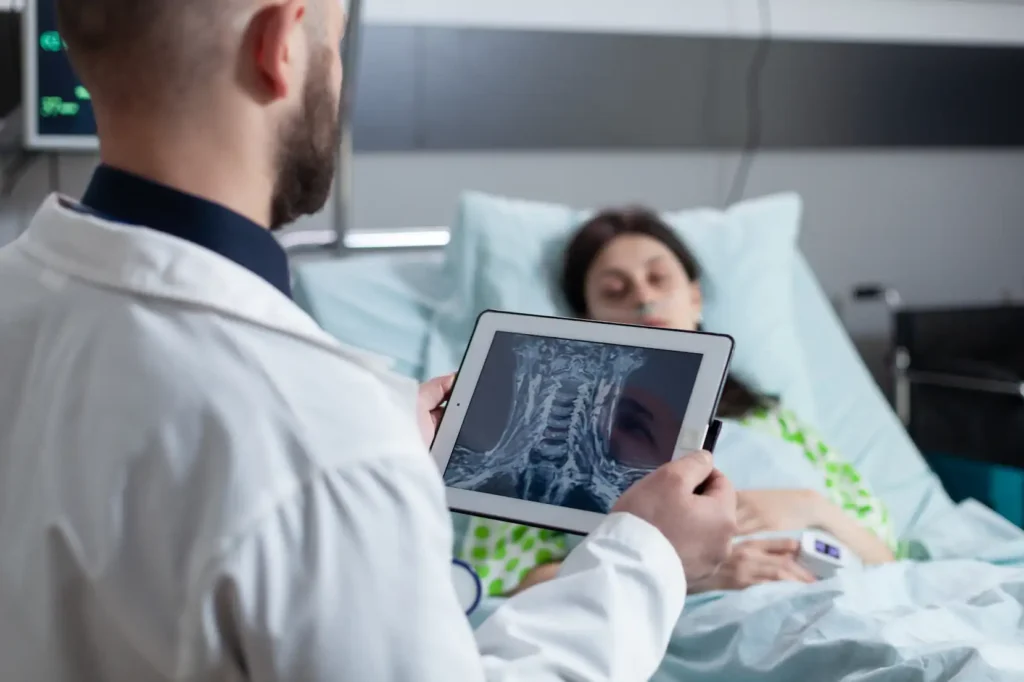
The good news is that bone loss is one of the easiest serious conditions to catch early. All it takes is a simple bone density test, and you no longer have to fight your way across town to get one. A mobile bone density scan in Los Angeles can now bring the entire process to your living room or office in a single short visit.
Bone loss often has no warning signs
Osteoporosis is sometimes called a silent disease, and for good reason. Bone tissue thins slowly over time, and most people feel absolutely nothing while it happens. There is no ache, no stiffness, no obvious signal. The first sign is often a fracture from a minor bump or fall that would not have harmed a younger, stronger skeleton.
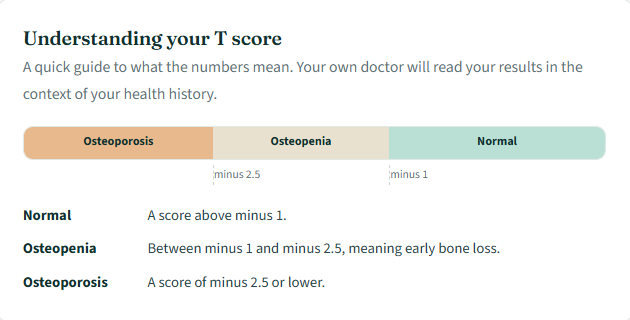
Doctors measure bone strength with a number called a T score. It compares your bone density with that of a healthy young adult, and it is the simplest way to see where you stand.
Who should get screened for osteoporosis in Los Angeles
Not everyone needs a scan at the same age, and the goal is never to worry healthy people. Still, national screening guidelines are clear about a few groups.
The US Preventive Services Task Force recommends that all women 65 and older be screened for bone loss. It also recommends screening for younger postmenopausal women who carry extra risk, based on a short risk assessment with their doctor. For men the evidence is less settled, though many physicians suggest a baseline test around age 70, especially after a fracture.
A few things can raise the odds of bone loss earlier in life. You may want to ask your doctor about screening sooner if any of these apply to you.
- A parent who broke a hip
- A thin or small frame, or significant recent weight loss
- Early menopause, or menopause combined with other risk factors
- Long term use of steroid medication
- Smoking, or heavier than moderate alcohol use
- Conditions such as rheumatoid arthritis or an overactive thyroid
If you have ever wondered whether you need a bone density scan, that question alone is a good reason to raise it at your next visit.
Why a mobile bone density scan in Los Angeles makes life easier
Los Angeles County is enormous, and getting to a hospital imaging center can mean a long drive, a search for parking, and a half day away from work or family. For an older adult who no longer drives, or who lives up a steep hillside street in the Palos Verdes hills or above Glendale, that trip can be the single reason a needed test keeps getting postponed.
This is where a newer option has changed things. A growing number of South Bay and Westside residents are turning to mobile providers who come to them. Services such as Superior Bone Scanning let you book an in home REMS bone scan that is performed right in your living room or a quiet office. The technology, known as REMS, uses ultrasound rather than radiation, so there is no exposure to think about and no hospital facility required.
For busy families, the appeal is obvious. An adult child in Burbank can arrange a scan for a parent in Redondo Beach without anyone taking a day off or sitting in freeway traffic.
REMS vs DXA, what is the difference?
For decades the standard bone density test has been the DXA scan, short for dual energy X ray absorptiometry. It is accurate, well studied, and still treated as the clinical benchmark. Its drawbacks are practical rather than medical. It uses a small dose of radiation, and the machine is large and fixed in place, so you have to travel to it.
REMS, which stands for Radiofrequency Echographic Multi Spectrometry, takes a different route. It measures bone at the same important sites, the spine and the hip, using sound waves instead of X rays. Because it is portable and radiation free, it can be done almost anywhere. REMS also looks at bone quality and strength, not density alone, and can help estimate your risk of a fracture over the next five years.
Neither test replaces a conversation with your physician, and the right choice depends on your history. For a clear look at the two methods, see how REMS compares to a DXA scan.
What to expect from a mobile bone scan
If you have never had a bone density test, there is nothing to dread. A REMS scan is quick and completely painless. There is no needle, no dye, and no need to undress beyond loosening a waistband. You lie back comfortably while a technician moves a small probe over your lower back and hip. Most visits are short, and you receive your results with a clear explanation to share with your own doctor.
Simple ways to protect your bone health
A scan tells you where your bones stand today, but the habits you keep matter just as much. For most people the basics do most of the work. Regular weight bearing movement, a walk along the beach, a tennis match, or an afternoon in the garden, signals your bones to stay strong. Enough calcium and vitamin D supports that effort, and plenty of Angelenos run low on vitamin D despite the sunshine, since sunscreen and long indoor days both play a part.
Falls are the other half of the picture. In a city full of hillside homes and split level floor plans, from the Palos Verdes bluffs to the canyons above Glendale, a few small changes lower the risk a great deal. Good lighting on the stairs, a grab bar where it helps, and clearing away loose rugs and cords all go a long way. If you have already been told your bone density is low, your doctor can walk you through whether medication makes sense alongside these everyday steps.
The bottom line
Bone health rarely feels urgent until a fracture forces the issue, and by then the options are narrower. A simple screening can show you exactly where you stand while there is still plenty you can do, from diet and weight bearing exercise to medication when it is warranted.
If a hospital visit has been the thing holding you back, it no longer has to be. A local provider such as Superior Bone Scanning can bring a radiation free scan to your door anywhere from the South Bay to Pasadena, so staying a step ahead of bone loss fits neatly into an ordinary LA week.
Frequently asked questions
Who should get a bone density scan?
Current guidelines recommend screening for all women 65 and older, and for younger postmenopausal women with added risk factors such as a family history of fractures or long term steroid use. Men with risk factors often benefit too. When in doubt, ask your doctor.
What exactly is a mobile bone density scan?
It is a bone density test performed at your home or office instead of a hospital. A technician brings a portable REMS ultrasound device to you, so there is no travel, no waiting room, and no radiation.
Is a REMS scan as reliable as a DXA scan?
REMS measures bone at the same key sites as DXA, the spine and hip, and has been validated against it in research. It also adds information about bone quality. Your physician can tell you which test fits your situation best.
Does a bone density scan expose me to radiation?
A traditional DXA scan uses a very small dose of X ray radiation. A REMS scan uses ultrasound, so it involves no radiation at all, which makes repeat testing easy.
What is a T score, and what is a good one?
A T score compares your bone density with a healthy young adult. Above minus 1 is normal, between minus 1 and minus 2.5 signals osteopenia, and minus 2.5 or lower indicates osteoporosis.
How often should I be screened?
There is no single rule, since it depends on your results and risk level. Many people are rechecked every couple of years. Your doctor will suggest the right interval for you.
Do I need a referral to book a mobile scan?
Many mobile providers let you schedule directly without a referral, though it is always wise to share your results with your doctor. Check with the provider about their process and any insurance questions.
How should I prepare for the appointment?
Very little is needed. Wear comfortable clothing with a waistband you can loosen, and set aside less than an hour. The technician explains each step and reviews your results before leaving.